


Depositions are a fundamental part of the pre-trial discovery process in civil litigation, giving each side the opportunity to question witnesses under oath before trial. Whether you are an attorney preparing for your first deposition or a witness who has been asked to appear, understanding how depositions work helps you know what to expect at every stage.
This guide covers the full deposition process from scheduling through transcript use at trial, including who participates, what rules apply, how objections work, and what happens after the deposition ends.
What Is a Deposition?
A deposition is a formal, out-of-court proceeding where a witness provides sworn testimony in response to questions from attorneys. A court reporter creates a word-for-word transcript of the testimony, which can later be used in motions, trial preparation, and as evidence in court.
Depositions serve several purposes in litigation:
- Fact gathering — Attorneys learn what a witness knows about the events in dispute.
- Locking in testimony — Sworn deposition testimony can be used to impeach a witness who changes their story at trial.
- Evaluating witnesses — Seeing how a witness responds under questioning helps attorneys assess credibility and demeanor.
- Narrowing issues — Depositions often clarify which facts are disputed and which are not, helping focus the case for trial or settlement.
Depositions are governed by the Federal Rules of Civil Procedure (FRCP Rules 27-32) in federal court and by analogous state rules in state court. For a detailed walkthrough of the procedural rules, see Rules Governing Depositions: Navigating the Legal Framework.
Who Can Be Deposed?
Almost anyone with relevant knowledge about a case can be deposed. Common deponents include:
- Parties to the lawsuit — Plaintiffs and defendants are routinely deposed.
- Eyewitnesses — People who observed the events at issue.
- Expert witnesses — Experts retained by either side to provide opinions on technical or specialized topics.
- Corporate representatives — Under FRCP Rule 30(b)(6), a party can depose a corporation by designating topics, and the corporation must produce a representative who can testify on those topics.
- Treating physicians — Doctors who treated the plaintiff are frequently deposed in personal injury and medical malpractice cases.
- Third-party witnesses — Anyone else with relevant knowledge, typically compelled to attend via subpoena.
Scheduling and Notice
The deposition process begins with scheduling. The party taking the deposition must serve written notice to all parties in the case. The notice includes:
- The date, time, and location of the deposition
- The name and address of the deponent
- The method of recording (stenographic, audio, video, or a combination)
- For Rule 30(b)(6) depositions, a description of the topics to be covered
Most jurisdictions require at least 10 to 14 days’ notice, though parties frequently negotiate dates informally. Non-party witnesses must be served with a subpoena to compel attendance. If a party wants to take more than 10 depositions in a case, they generally need a court order or stipulation from the other side.
The Deposition Setting
Depositions typically take place outside the courtroom, most often in an attorney’s conference room. The key participants include:
- The deponent — The witness being questioned
- Examining attorney — The attorney asking questions, usually representing the opposing party
- Defending attorney — The attorney representing the deponent or the deponent’s side
- Court reporter — The neutral professional who creates the official transcript
- Videographer — Present when the deposition is being recorded on video, which is increasingly common
Unlike courtroom proceedings, there is no judge present during most depositions. Disputes about questions or objections are either resolved by agreement between attorneys or deferred for the court to rule on later.
How the Deposition Proceeds
The Oath
The court reporter begins by administering an oath to the deponent, who swears or affirms to tell the truth. This oath carries the same legal weight as testimony given in court — lying under oath in a deposition constitutes perjury.
Direct Examination
The examining attorney asks questions, typically starting with background information (name, address, employment) before moving to case-specific topics. Questions can cover anything reasonably calculated to lead to discoverable evidence, which is a broader standard than what would be admissible at trial.
Common questioning approaches include:
- Open-ended questions — “Tell me what happened on the morning of March 15.”
- Specific factual questions — “What time did you arrive at the intersection?”
- Document-based questions — “I’m showing you Exhibit A. Do you recognize this document?”
- Timeline questions — “Walk me through the events in chronological order.”
The deponent should answer each question truthfully and completely, but should not volunteer information beyond what was asked.
Objections
The defending attorney may object to questions during the deposition. Common objections include:
- Form objections — The question is leading, compound, vague, or assumes facts not in evidence.
- Privilege — The answer would require disclosing attorney-client communications, work product, or other privileged information.
- Relevance — While the scope of deposition questions is broad, questions with no conceivable connection to the case can be challenged.
In most jurisdictions, the deponent must still answer the question after an objection is noted, unless the objection is based on privilege. The objections are preserved on the record for the court to rule on later if the deposition transcript is offered as evidence.
Cross-Examination
After the initial examination, the defending attorney and attorneys for other parties have the opportunity to ask their own questions. This cross-examination may seek to clarify answers, rehabilitate the witness, or explore additional topics.
Breaks and Duration
The FRCP limits depositions to one day of seven hours unless the parties agree otherwise or the court orders an extension. Attorneys cannot coach the deponent during breaks while a question is pending. Brief breaks for water, restroom, or consultation with counsel (when no question is pending) are standard.
Remote Depositions
Remote depositions via video conference became standard practice after 2020. FRCP Rule 30(b)(4) allows depositions by remote means when the parties stipulate or the court orders it. Most state courts have adopted similar provisions.
Remote depositions work largely the same as in-person depositions, with a few differences:
- The court reporter administers the oath remotely
- Document exhibits are typically shared via screen or sent electronically in advance
- The video platform must provide a stable connection and clear audio/video
- Some jurisdictions require that the deponent be alone in the room (except for their attorney)
Remote depositions have expanded access to witnesses in other states or countries without the cost of travel.
After the Deposition
Transcript Review
After the deposition, the court reporter prepares a written transcript. Under FRCP Rule 30(e), the deponent has 30 days to review the transcript and submit an errata sheet noting any changes. Changes can correct transcription errors but substantive changes to testimony may be challenged by the opposing party.
Deposition Summaries
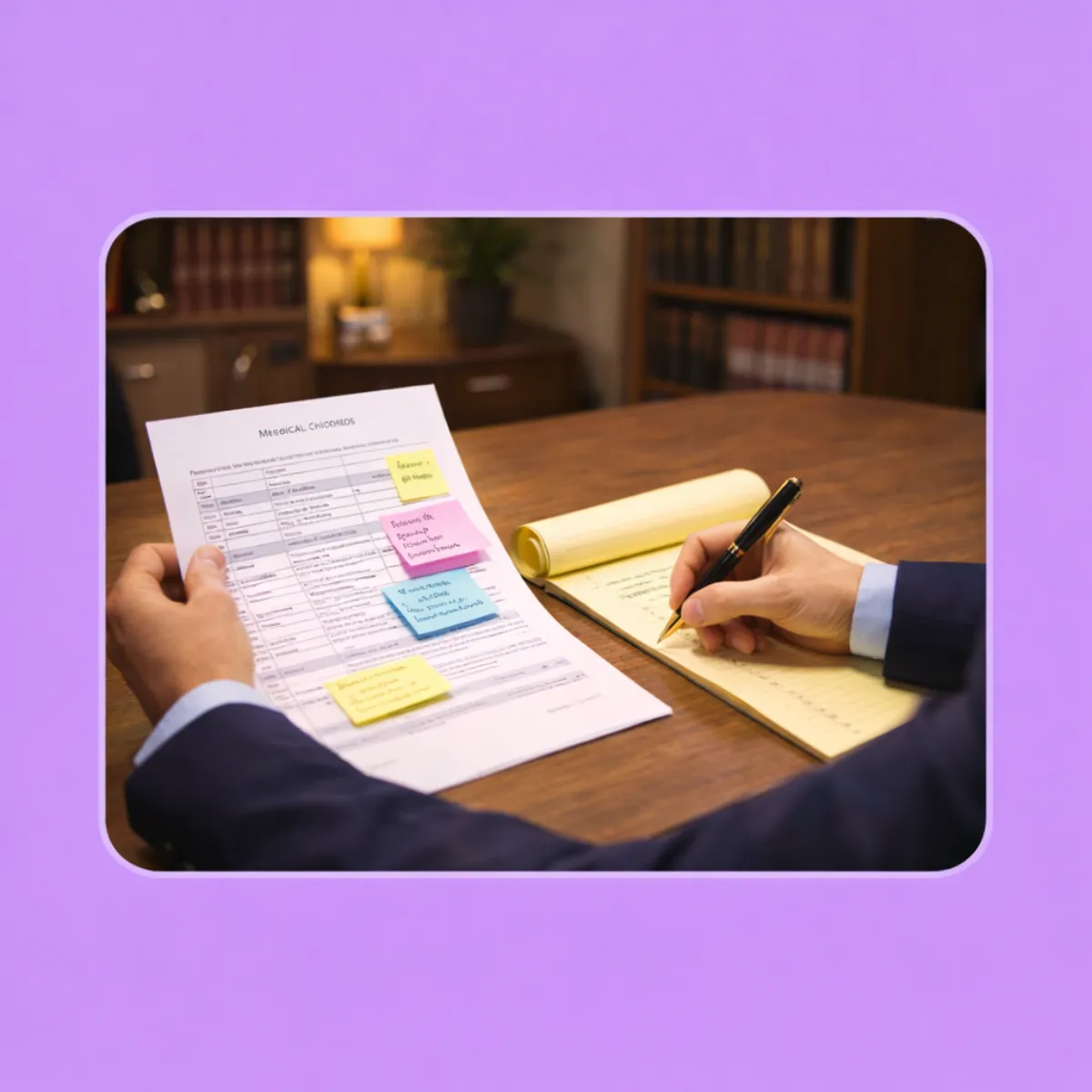
Deposition transcripts can run hundreds of pages. Attorneys and paralegals create deposition summaries to distill the key testimony into a usable format. The most common format is a page-line summary, which maps each significant piece of testimony to its transcript location. For a step-by-step walkthrough, see our guide on how to draft a page-line deposition summary.
AI tools like Dodonai’s deposition summary software can generate these summaries in minutes, saving hours of manual review time. For guidance on choosing the right tool, see our litigator’s guide to choosing deposition summary software.
How Depositions Are Used in Litigation
Deposition transcripts serve several critical functions as a case moves toward trial:
- Pre-trial motions — Parties use deposition testimony to support or oppose motions for summary judgment, motions to dismiss, and motions in limine. A witness’s sworn statements can establish (or undermine) material facts without a trial.
- Trial preparation — Attorneys use deposition transcripts and summaries to plan direct and cross-examination, identify strengths and weaknesses in the opposing case, and prepare witnesses for trial testimony.
- Impeachment at trial — If a witness testifies differently at trial than they did in their deposition, the opposing attorney can read the deposition testimony into the record to highlight the inconsistency.
- Substitute testimony — If a witness is unavailable to testify at trial (due to death, illness, distance, or other reasons), the deposition transcript may be read to the jury as a substitute for live testimony under FRCP Rule 32.
- Settlement negotiations — Deposition testimony often drives settlement discussions by revealing the strength or weakness of each side’s case.
For more on how deposition testimony shapes trial strategy, see The Role of Depositions in Litigation: A Closer Look and Using Depositions as Evidence: A Deep Dive.
Types of Depositions
Not all depositions follow the same format. The main types include:
- Oral depositions — The standard format where attorneys ask questions and a court reporter records the testimony.
- Written depositions (depositions on written questions) — Less common, where questions are submitted in writing and read to the witness by a court officer. Used mainly for simple factual matters.
- Rule 30(b)(6) depositions — Directed at an organization rather than an individual. The organization must designate a representative who can testify on specified topics.
- Expert depositions — Depositions of retained expert witnesses, which focus on the expert’s opinions, methodology, and qualifications.
- Apex depositions — Depositions of high-ranking corporate executives, which some jurisdictions restrict to prevent harassment or undue burden.
Preparing for a Deposition
Whether you are the attorney or the witness, preparation is essential.
For attorneys taking the deposition:
- Review all relevant documents, prior testimony, and interrogatory answers
- Prepare a topic outline (not a script) organized by subject area
- Identify key admissions you need to establish
- Anticipate objections and prepare responses
For attorneys defending the deposition:
- Meet with the deponent to review likely topics and documents
- Explain the ground rules: listen carefully, answer only what is asked, say “I don’t know” when appropriate
- Prepare for potential privilege issues
For witnesses:
- Review relevant documents and refresh your memory about events
- Tell the truth — do not guess or speculate
- Listen to each question completely before answering
- Keep answers concise and responsive to the specific question asked
- Ask for clarification if a question is unclear
Deposition Costs
Deposition expenses can add up quickly. Typical costs include:
| Expense | Typical Range |
|---|---|
| Court reporter (per page) | $3 - $10 |
| Transcript (100 pages) | $300 - $1,000 |
| Videographer (per day) | $500 - $1,500 |
| Conference room rental | $200 - $500 |
| Expedited transcript fee | 25% - 100% surcharge |
| Attorney preparation + attendance | Varies by hourly rate |
The largest cost is usually attorney time. Reducing post-deposition review time — by using AI deposition summary tools instead of manual summarization — can significantly lower overall case costs.
Conclusion
Depositions are one of the most powerful tools in civil litigation, giving attorneys direct access to witness testimony under oath before trial. Understanding the process — from scheduling and examination through transcript review and trial use — is essential for anyone involved in litigation. Through careful preparation and strategic questioning, attorneys can use depositions to build stronger cases, drive settlements, and prepare for trial.